...
Career & Skills

3D Building Designer — Skills, Tools, Workflow & Career Growth (2025 Edition)

Learn what a 3D building designer does, how they work, which tools they use, and why this profession is shaping the future of architectural visualization in 2025.

TT
TEELI Team
TEAM
3D Visualization Specialists
Jan 08, 2025
12 min read
Share this article:
Professional 3D building designer workspace showing complete workflow pipeline from CAD modeling to photorealistic architectural rendering with BIM integration and visualization tools 2025

What Is a 3D Building Designer?


They collaborate with architects, real-estate developers, engineers, and interior designers to produce realistic renders, virtual walkthroughs, and animations. The outcome? Faster approvals, better marketing visuals, and clearer communication across project teams.


Core Responsibilities of a 3D Building Designer


Modern firms expect designers to combine technical precision with aesthetic judgment. It's not just modeling — it's creating emotional realism that sells a vision.


Key Skills Needed to Become a 3D Building Designer


Professional 3D visualizers combine technical mastery with artistic vision to create compelling architectural visuals.


1. Technical Expertise


Software mastery: Blender, Autodesk 3ds Max, Revit, Rhino, and SketchUp.

Rendering tools: V-Ray, Corona Renderer, Enscape, Lumion, D5 Render.

Texturing: Adobe Substance 3D, Quixel Megascans, or Polyhaven.

Workflow: From modeling lighting rendering compositing.

2. Artistic Sensibility


Understanding of composition, color psychology, and lighting balance.

Ability to simulate mood lighting and realistic reflections.

3. Architectural Understanding


Familiarity with building codes, proportions, and materials.

Knowing how real spaces function makes renders more believable.

4. Soft Skills


Communication & collaboration with design teams.

Time management, creative feedback handling, and client presentation.


Tools & Software Ecosystem (2025)


Emerging AI Tools


  • Agentic AI Architecture: Automates camera, lighting, and asset placement.
  • Kinetix AI: Creates interactive rooms using generative scene understanding.
  • Runway ML: Upscales renders & removes imperfections.

  • Professional 3D building design software comparison 2025 featuring Blender Cycles GPU renderer, Autodesk 3ds Max with V-Ray engine, Revit BIM architecture tools, SketchUp Enscape real-time visualization and Unreal Engine 5 photorealistic rendering for architectural visualization workflow

    Career Path & Growth Opportunities


    Step-by-Step Career Journey


    Trainee / Junior Visualizer (0–2 yrs): Asset modeling, texture prep, test renders.

    Mid-Level Designer (3–5 yrs): Own full visualizations, lighting setup, and deliverables.

    Senior / Visualization Lead (5+ yrs): Manage pipelines, mentor teams, interface with clients.

    Art Director / Visualization Head: Strategic creative direction for marketing visuals.

    Complete 3D building designer career roadmap 2025 from entry-level Junior Visualizer to Senior Art Director with salary benchmarks $40K-$85K annually, technical skill progression in Blender V-Ray Revit, industry growth 18.7% CAGR and freelance opportunities in architectural visualization market

    Industry Demand (2024–2025)


  • Statista 2025 report: Architectural visualization market growing at 18.7% CAGR through 2030.
  • 3D designers are listed among the Top 20 Fastest Growing Creative Tech Jobs (Skillcrush Report, 2024).
  • India, UAE, and the US lead in hiring due to booming real-estate visualization markets.

  • As demand grows, professionals skilled in interior rendering find expanding opportunities across residential and commercial projects.


    Freelancers charge between $25–$70/hour, depending on complexity and photorealism quality.


    Workflow — How a 3D Building Designer Works


    The design process requires both technical precision and creative vision, similar to creating detailed 3D room models for interior visualization projects.


    Step-by-Step Rendering Pipeline


  • Receive Inputs: CAD drawings, sketches, or references from architects.
  • Modeling: Clean geometry, accurate proportions, and object naming conventions.
  • Material Setup: Use PBR libraries or real-world scanned materials.
  • Lighting Design: Combine HDRI skies + area lights + emissive sources.
  • Camera Setup: Follow rule of thirds, human eye-level framing (~1.6 m).
  • Rendering: Use GPU acceleration (RTX / M3 chips) for efficiency.
  • Post-Processing: Subtle grading in Photoshop or DaVinci Resolve.
  • Delivery: Export in WebP, PNG, or MP4 formats.

  • This systematic approach mirrors the process used in 3D house rendering, where precision and artistic judgment combine to create market-ready visuals.
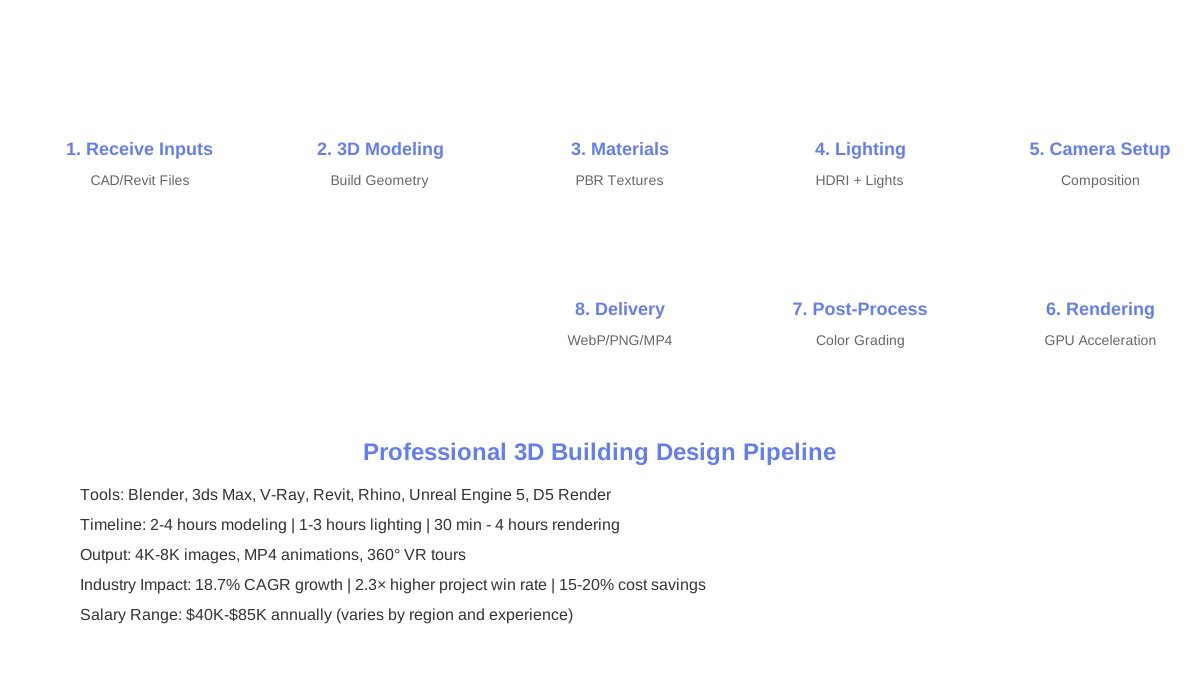

    Professional 8-step 3D building design workflow pipeline from CAD BIM input to photorealistic delivery showing modeling in Blender 3ds Max, PBR material texturing, HDRI lighting setup, camera composition, GPU ray tracing rendering with V-Ray Cycles, post-processing color grading and 4K 8K WebP PNG MP4 export for architectural visualization projects 2025


    Business Impact — Why Firms Invest in 3D Designers


    Mastering techniques for realistic room visualization enhances a designer's ability to create emotionally compelling spaces that drive client decisions.


    Future of 3D Building Design (2025–2030)


  • AI-Assisted Modeling: Tools like Runway, Luma, and NVIDIA Omniverse automate material generation.
  • Real-Time Cloud Rendering: NVIDIA CloudXR allows streaming high-res renders in real-time.
  • Virtual Collaboration: Multi-user VR meetings for design approvals.
  • Sustainability Visualization: Integrating energy and daylight simulations directly in render previews.
  • Generative AI + BIM: Automatic façade and floor plan generation from text prompts.


  • FAQ — People Also Ask