...
Career & Skills

3D Visualizer — Role, Workflow, Tools & Career (2025 Guide)

Learn what a 3D visualizer does, their workflow, top tools (Blender, V-Ray, D5), career path and salaries, and how to build a portfolio that ranks in search.

TT
TEELI Team
TEAM
3D Visualization Specialists
Jan 12, 2025
11 min read
Share this article:
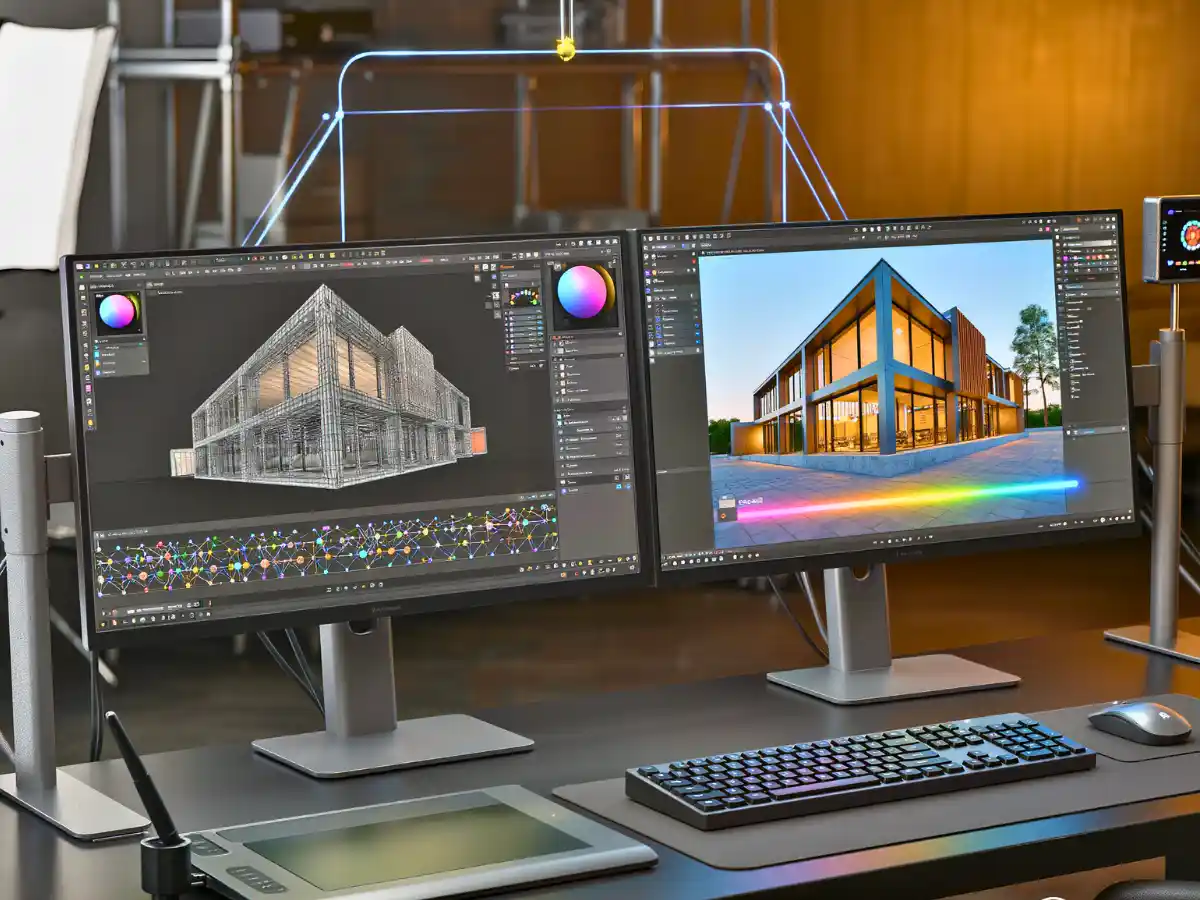
Professional 3D visualizer workspace setup showing dual monitors with architectural modeling viewport, photorealistic rendering output, graphics tablet and color-calibrated display for visualization work 2025

What is a 3D Visualizer?


Why 3D Visualizers Matter Now


3D visualization converts technical drawings into persuasive imagery. For architecture, real-estate and product commerce, high-quality visuals increase engagement and accelerate decisions. The visualization software market is growing rapidly, driving demand for skilled visualizers and faster real-time pipelines. Learn more about the complete 3D rendering process for houses to understand end-to-end workflows.


Core Responsibilities (what firms expect)


  • Modeling: Convert CAD/Revit drawings into clean 3D geometry.
  • Materials & Texturing: Create PBR materials and realistic texture maps.
  • Lighting & Camera: Set natural and artificial lighting, camera composition for realism.
  • Rendering & Post: Generate high-res stills and do color grading, compositing.
  • Optimization & Delivery: Prepare GLB/FBX/OBJ for web/AR/VR or optimized stills for web. For detailed guidance on creating 3D room models, see our comprehensive workflow guide.
  • Collaboration: Coordinate with architects, BIM teams, marketers and developers. Working with 3D building designers requires understanding their technical requirements and design language.

  • Job descriptions and career pages emphasize this hybrid technical-creative role.


    Skills & Competencies (SEO-friendly list)


    Essential skills recruiters search for:


  • 3D modeling: 3ds Max, Blender, Rhino.
  • Rendering engines: V-Ray, Corona, D5 Render, Twinmotion, Lumion.
  • Real-time engines: Unreal Engine, Unity for VR/AR.
  • Texturing: Substance 3D, Quixel Megascans, Photoshop.
  • Lighting & composition: Camera lenses, exposure, color grading.
  • Optimization: LODs, polygon reduction, bake maps for real-time.
  • Soft skills: Version control, client communication, brief interpretation.

  • Industry job guides and skills lists confirm these are high-value search terms and hiring filters.


    Tools & Tech Stack (what to include on a portfolio page)


    Group assets by purpose. Use these anchor keywords and tools on your pages to match SERP intent:


  • Modeling: Blender, 3ds Max, SketchUp.
  • Offline rendering: V-Ray, Corona, Arnold.
  • Real-time / Fast iteration: D5 Render, Lumion, Twinmotion, Enscape.
  • Post & compositing: Photoshop, After Effects, DaVinci Resolve.
  • AR/Web export: GLB/GLTF, USDZ, Sketchfab viewers.

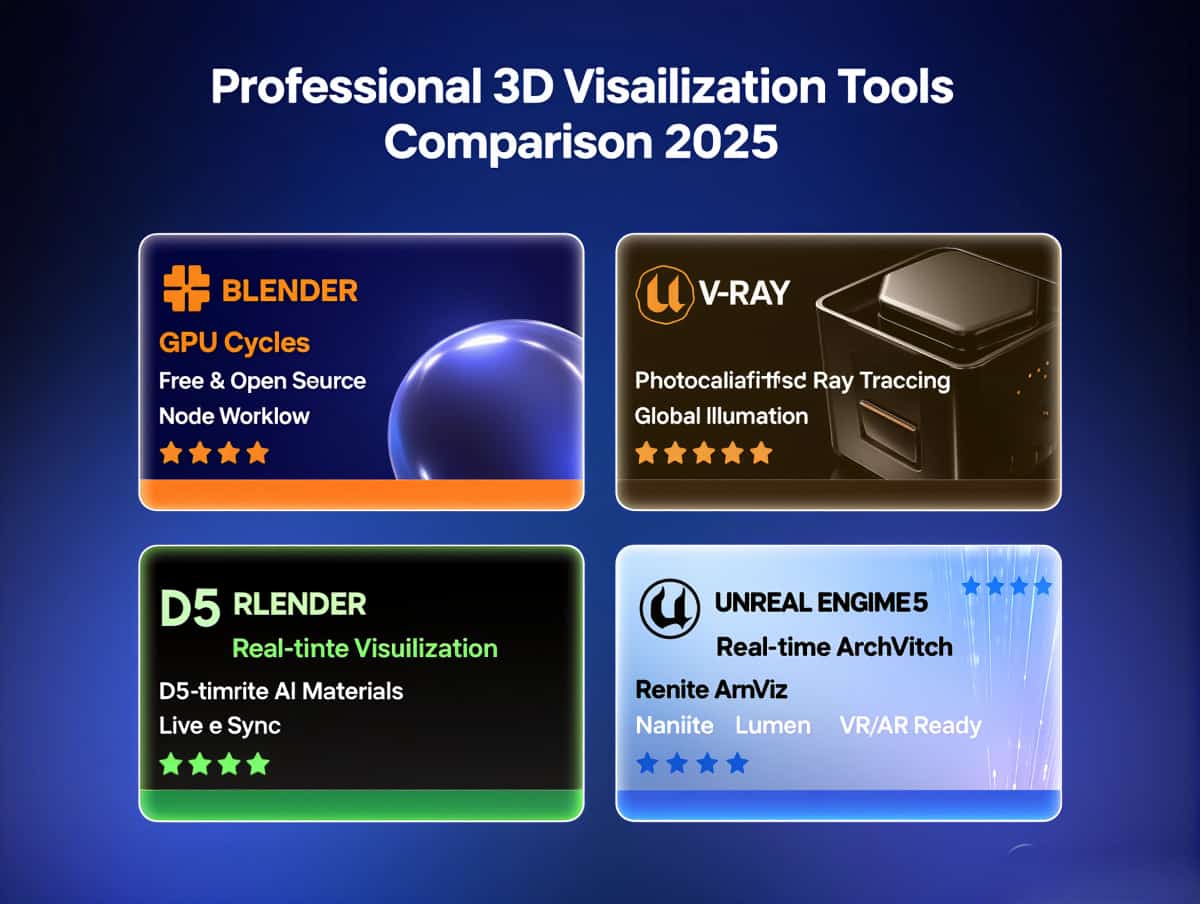
  • Professional 3D visualization software tools comparison 2025 featuring Blender Cycles GPU renderer, V-Ray photorealistic ray tracing engine, D5 Render real-time visualization platform and Unreal Engine 5 for architectural visualization workflow

    Chaos and tool vendor resources list these as top visualization stacks; highlight them in headings and image alt text for SEO.


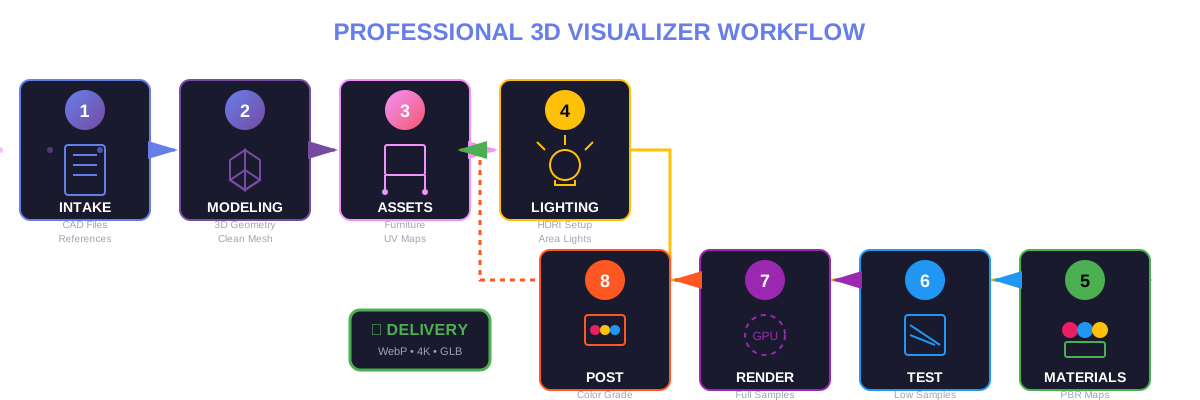
    Typical 3D Visualizer Workflow (step-by-step)


    1. Intake & References


  • Receive CAD/Revit, moodboards, material lists, camera directions.
  • Confirm dimensions, client KPIs (LCP, hero shot, social crops).

  • 2. Blocking / Modeling


  • Build base geometry.
  • Name layers and objects clearly for handoffs.

  • 3. Asset Placement & UVs


  • Import furniture or kitbash assets.
  • UV unwrap critical objects.
  • Use PBR maps.

  • 4. Lighting Pass (iterative)


  • Start broad (HDRI, sunlight).
  • Add fill lights and IES profiles for fixtures.

  • 5. Material & Detail Pass


  • Tune roughness/specular, add micro-imperfections, decals and AO bakes.

  • 6. Test Renders & Optimization


  • Low-sample tests for composition.
  • Bake lightmaps or proxy assets for big scenes.

  • 7. Final Render & Denoise


  • Full sample, denoise, render layers (beauty, z-depth, AO, masks).

  • 8. Post-production


  • Color correct, add bloom, lens effects, and composite people/cars/grass.

  • 9. Delivery


  • Provide source, web-ready images (WebP, AVIF), and interactive exports (GLB, MP4).

  • Complete 8-step 3D visualizer workflow pipeline from CAD modeling to post-production delivery showing geometry creation, PBR material texturing, HDRI lighting setup, camera framing, GPU rendering with denoising and color grading for architectural visualization projects 2025


    Showcasing Work — SEO & CRO tactics for portfolio pages


    To rank and convert, structure each project page like this:


  • H1: Project name + primary keyword (e.g., "Modern House — Architectural 3D Visualization by [Studio]")
  • Short lead (40–60 words) that includes the main query and outcome.
  • Hero image (1600–2400px) with filename and alt text using the primary keyword.
  • Project gallery: Mix webp stills + 30–90s teaser video.
  • Case study section: Brief brief → challenge → solution → outcome (impressions, CTR uplift).
  • Downloadable asset pack or behind-the-scenes (zip) for professionals.
  • FAQ block answering PAA style queries for that project.
  • JSON-LD: Article + ImageObject + VideoObject + FAQ.

  • This structure captures featured snippets, PAA boxes and image pack intent.


    Pricing & Market Signals (what clients search for)


    Pricing varies by region, complexity and deliverable set. Use search phrases clients use:


  • "3D visualization price per image 2025"
  • "Architectural render cost interior vs exterior"
  • "Interactive 3D walkthrough pricing"

  • Market reports show visualization and rendering markets expanding, supporting higher rates for real-time and interactive deliverables. Quote a rate range on your services page but also offer packages (Starter, Studio, Premium) to match search intent.


    Career Path & Salary (SEO keywords: 3d visualizer salary 2025)


    Common search intents here are "how much do 3D visualizers earn" and "how to become a 3D visualizer."


  • Junior / Freelance: Portfolio projects & small jobs.
  • Midlevel: Studio roles with full project ownership.
  • Senior / Lead: Pipeline design, client management, high-value projects.

  • Salaries differ by country and demand; include localized pages (e.g., "3D visualizer salary UK 2025") to capture regional traffic. Job and industry pages confirm steady demand and typical salary bands.


    SEO-Ready Project Page Checklist (copy + paste)


  • Title includes primary keyword.
  • First paragraph defines role within 40–60 words (target featured snippet).
  • At least one H2 answer to common PAA questions.
  • 3–5 images with alt text, WebP format, srcset responsive sizes.
  • One tutorial or behind-the-scenes video (MP4 + YouTube).
  • FAQ JSON-LD block (3–6 Qs) tuned to PAA.
  • Internal links to pillar content (3D Rendering of a House, Room 3D Model).
  • Page loads under 3s; lazy-load gallery.

  • This checklist matches SERP features and improves snippet chances.


    Advanced Opportunities — Real-time, AR & Agentic AI

    Real-time engines and AI are reshaping the role:


  • Real-time visualization (Unreal, D5) lets clients interact and stream high-quality scenes.
  • AR/GLB delivery enables product and room previews on mobile.
  • AI tools speed asset creation, material generation and lighting presets, but human judgement remains essential for composition and E-E-A-T.

  • Market signals show AI accelerating workflows but not replacing skilled visualizers.


    FAQ — People Also Ask